Gardening for Beginners: Complete Beginner’s Guide
Gardening can seem overwhelming when you are starting from scratch, but you do not need years of experience, expensive tools, or a huge backyard to grow a beautiful garden. With a little planning, basic knowledge, and regular care, almost anyone can learn how to garden successfully. Whether you want to grow colorful flowers, fresh vegetables, fragrant herbs, or attractive indoor plants, gardening is a rewarding hobby that allows you to spend time outdoors and connect with nature. This beginner’s guide to gardening explains the essential steps you need to know, from choosing the right location and preparing healthy soil to selecting plants, watering correctly, controlling weeds, and maintaining your garden throughout the seasons. By starting small and learning as you go, you can build confidence and create a healthy, productive garden that continues to improve year after year. If you are new to gardening and don’t know where to begin, our step-by-step guide on how to start a garden from scratch will help you plan your first garden with confidence.
1. Decide What You Want to Grow
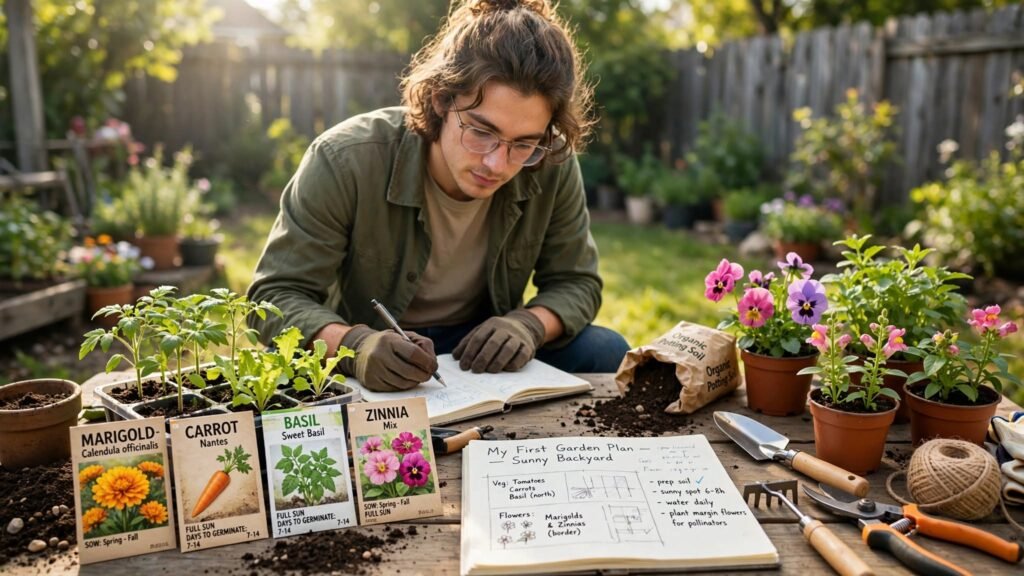
The first step in gardening for beginners is deciding what you want your garden to provide. Think about whether your main goal is growing vegetables, creating a flower garden, producing fresh herbs, attracting pollinators, improving your backyard, or simply adding more greenery to your home. Beginners often make the mistake of choosing too many plants at once, which can make gardening feel like a difficult chore. Instead, start with a small selection of easy-to-grow plants that match your interests and growing conditions. Vegetables such as lettuce, radishes, beans, tomatoes, and peppers can be good choices, while marigolds, sunflowers, zinnias, and herbs such as basil and mint are also beginner-friendly options. Choosing plants you genuinely enjoy gives you more motivation to care for them consistently.
2. Choose the Right Garden Location
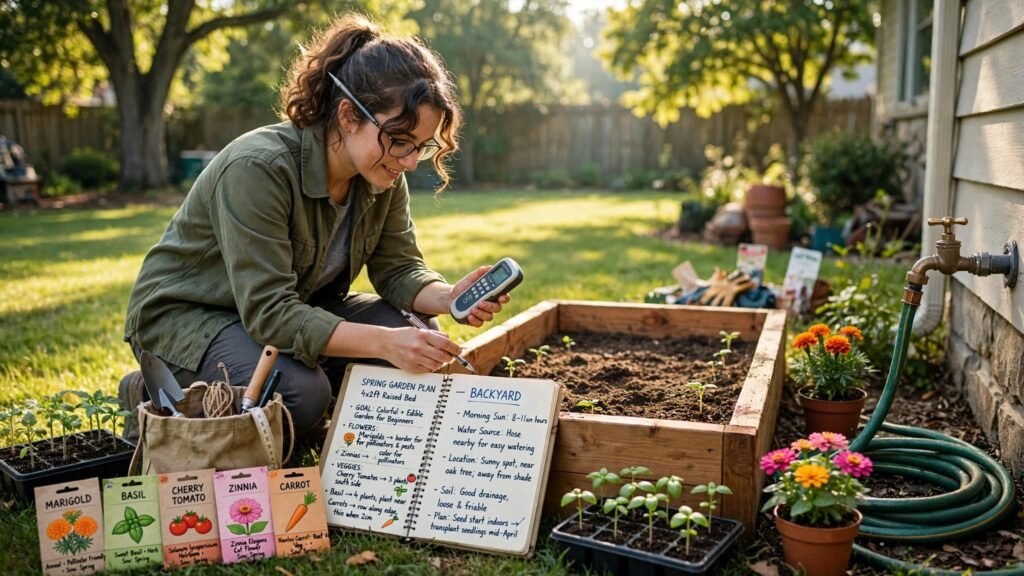
Choosing the right location is one of the most important decisions you will make. Most vegetables, herbs, and flowering plants need several hours of sunlight every day, although some plants prefer partial shade. Spend a day observing your yard and notice which areas receive morning, afternoon, or very little sunlight. Also consider drainage, accessibility, wind exposure, and proximity to a water source. A location that is easy to reach will make regular watering, weeding, harvesting, and inspection much easier. If you do not have a yard, you can grow many plants in containers on a balcony, patio, windowsill, or small outdoor space. The best garden location is not necessarily the largest one; it is the place that provides suitable growing conditions and makes plant care convenient.
3. Understand Your Soil
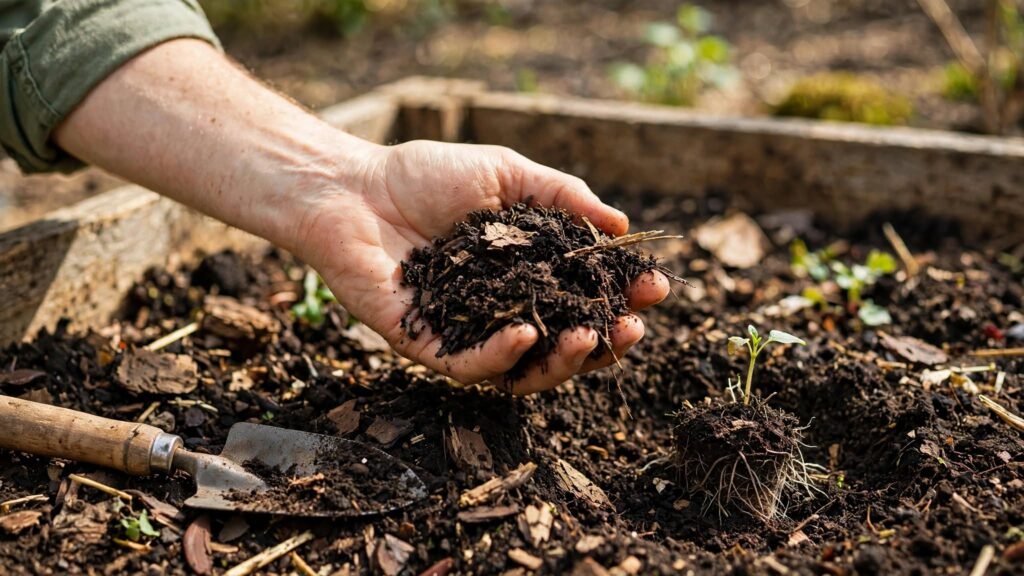
Healthy soil is the foundation of a successful garden. Plants depend on soil for water, nutrients, oxygen, and physical support, so understanding your soil before planting can save you many problems later. Garden soil may be sandy, clay-heavy, loamy, or somewhere in between. Loamy soil is generally desirable because it balances drainage, moisture retention, and nutrients. If your soil is compacted, extremely sandy, or heavy with clay, you can improve it by adding organic matter such as compost or well-rotted organic material. Avoid simply adding large amounts of fertilizer without understanding what your soil needs. A basic soil test can provide useful information about pH and nutrient levels. Healthy soil should be loose enough for roots to grow easily and should allow excess water to drain while retaining enough moisture for plants.
4. Start With Easy Plants
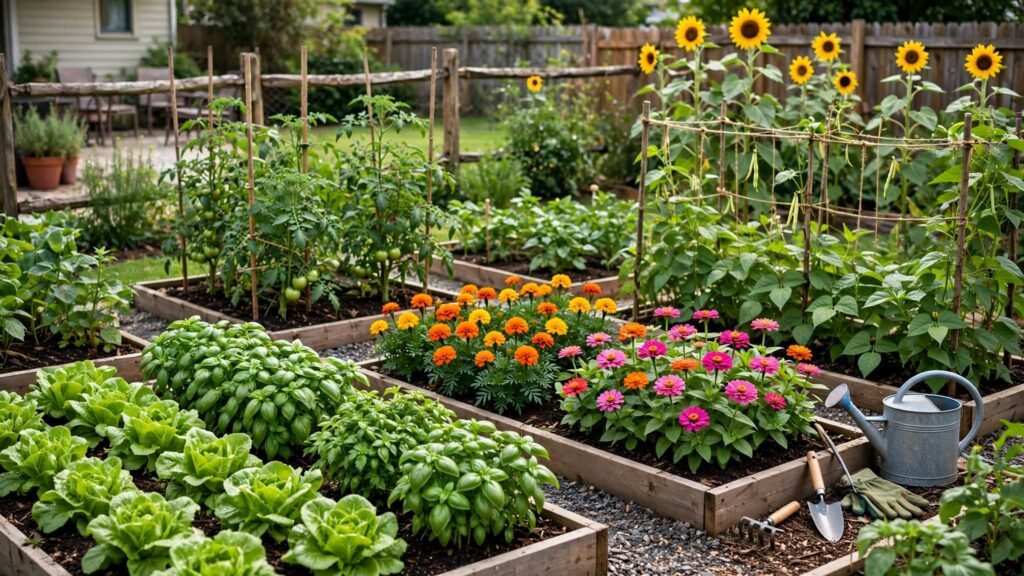
Beginners should choose plants that are relatively forgiving and suited to their local growing conditions. Starting with difficult or highly sensitive plants can quickly become frustrating. Look for plants that have straightforward care requirements and can tolerate minor mistakes. Herbs such as basil, parsley, chives, and mint are useful choices, while lettuce, radishes, beans, cucumbers, and some varieties of tomatoes can be rewarding vegetables. For flowers, consider marigolds, zinnias, sunflowers, nasturtiums, and other varieties recommended for your climate. Always check the plant’s sunlight, spacing, watering, soil, and temperature requirements before purchasing it. Native or locally adapted plants can be especially useful because they are often better suited to the conditions in your area.
5. Learn When and How to Plant
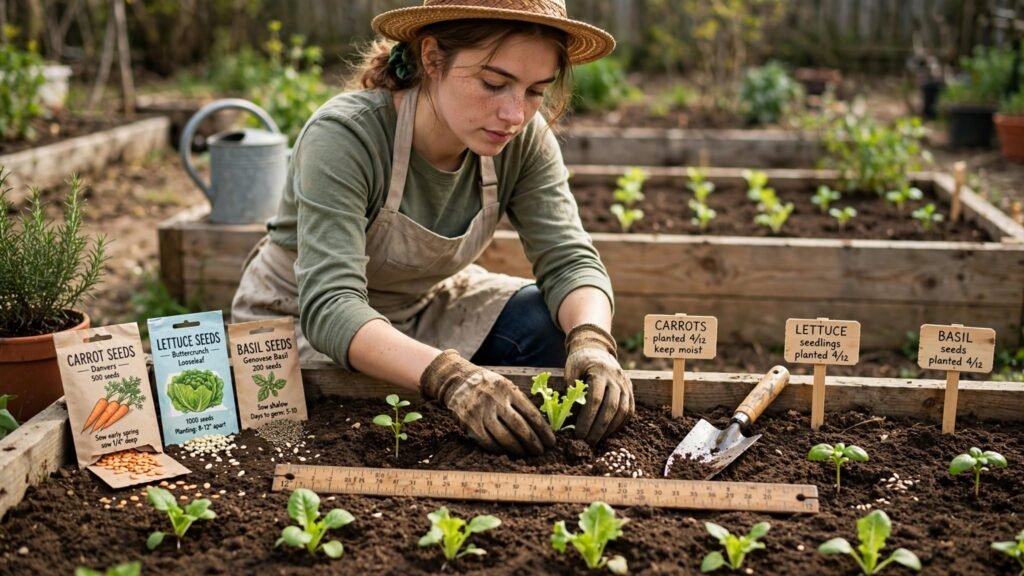
Timing matters in gardening. Seeds and young plants should be planted according to their preferred temperature and growing season rather than simply whenever you have free time. Some plants prefer cool weather, while others need warm soil and temperatures to grow successfully. Read the seed packet or plant label carefully for planting depth, spacing, sunlight requirements, and recommended growing season. When planting seeds, avoid placing them too deeply because small seedlings may struggle to emerge. Transplants should be handled gently and planted at an appropriate depth. Give each plant enough room to develop instead of overcrowding the garden. Proper spacing improves air circulation, reduces competition for nutrients and water, and can lower the risk of certain plant diseases.
6. Water Your Garden Correctly
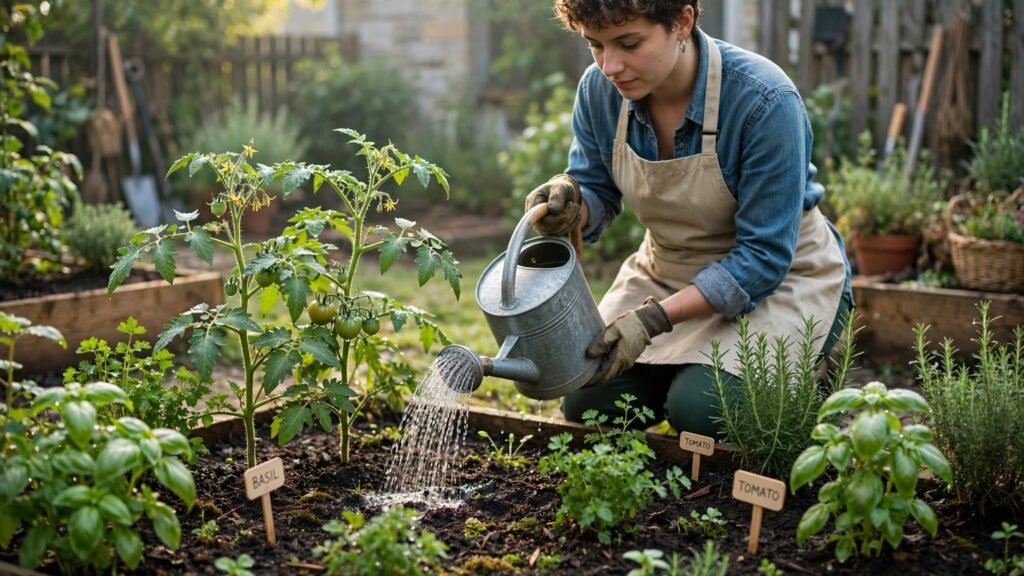
Watering is essential, but more water does not always mean healthier plants. Both underwatering and overwatering can damage roots and reduce plant growth. Instead of watering automatically every day, check the soil and consider the plant’s individual needs, weather, temperature, and container size. Water deeply enough to reach the root zone rather than lightly wetting only the surface. Morning is often a convenient time to water because plants can use the moisture throughout the day and foliage has time to dry. Watering at soil level can also help keep leaves drier. Container plants may need more frequent watering because pots can dry out faster than garden beds. Learning to recognize signs of water stress will make you a much more confident gardener.
7. Feed Plants With the Right Nutrients
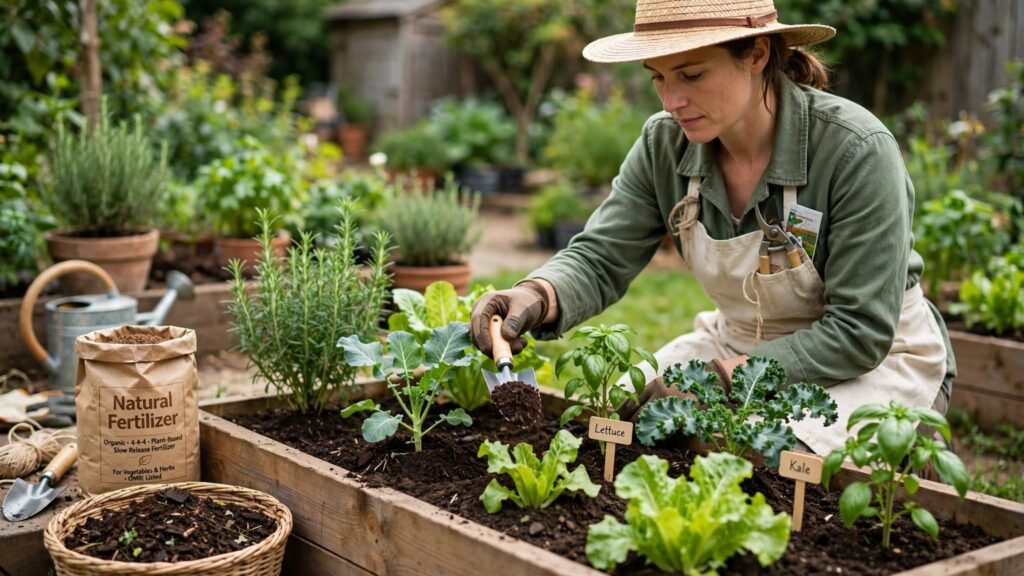
Plants need nutrients to produce healthy leaves, strong roots, flowers, fruits, and seeds. Nutrient requirements vary between plants, so avoid assuming that every plant needs the same fertilizer. Compost and other organic matter can improve soil structure while supplying a range of nutrients. When additional fertilizer is necessary, follow the product instructions carefully and avoid overfertilizing. Excess fertilizer can damage roots and contribute to nutrient problems. Watch your plants for signs of poor growth, pale leaves, or weak development, but remember that nutrient deficiencies can sometimes look similar to problems caused by watering, pests, diseases, or unsuitable light. Building healthy soil over time is generally more beneficial than relying only on quick fertilizer applications.
8. Control Weeds Early
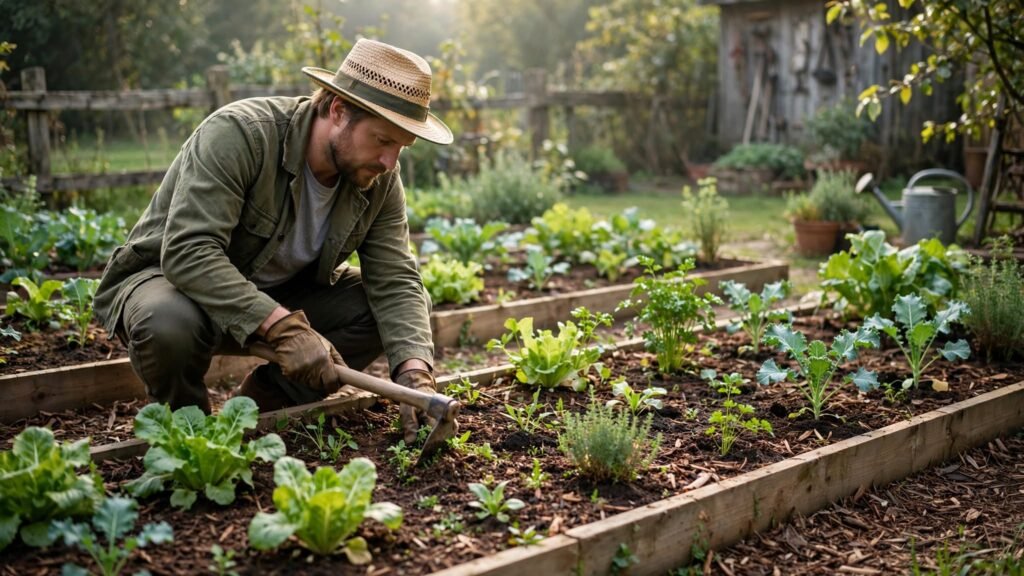
Weeds compete with garden plants for sunlight, water, nutrients, and space. The easiest time to control weeds is when they are small. Inspect your garden regularly and gently remove weeds before they become large and develop seeds. Hand weeding works well for small gardens, while a hoe can help with larger areas. Mulching around plants can also reduce weed growth while helping the soil retain moisture. Keep mulch slightly away from plant stems to reduce the chance of excessive moisture around the base. Avoid allowing weeds to become established throughout the garden because removing mature weeds is usually more difficult. A few minutes of maintenance several times a week can prevent a much bigger gardening problem later.
9. Watch for Pests and Plant Diseases
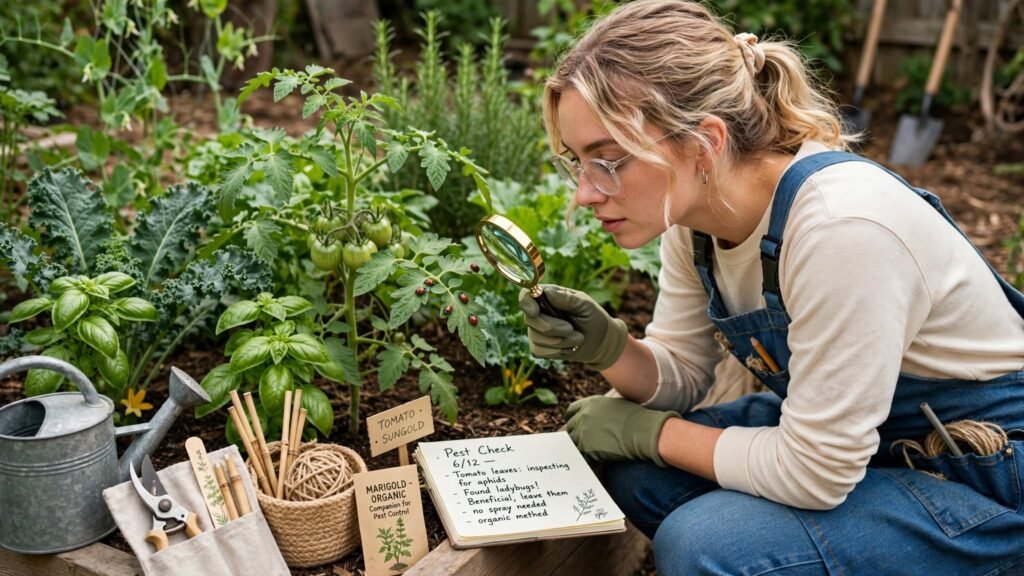
Garden pests and diseases are common challenges, but discovering them early makes them easier to manage. Regularly inspect both the upper and lower surfaces of leaves, stems, and new growth. Look for holes, discoloration, sticky residue, curling leaves, unusual spots, damaged stems, or insects. Do not immediately reach for strong pesticides when you see a problem. First identify what is causing the damage and consider simple approaches such as removing badly affected leaves, improving airflow, encouraging beneficial insects, or using appropriate organic pest-control methods. Healthy plants with suitable light, water, soil, and spacing are often better prepared to handle minor pest pressure. Regular observation is one of the most valuable habits a beginner gardener can develop.
10. Use Mulch to Protect the Soil
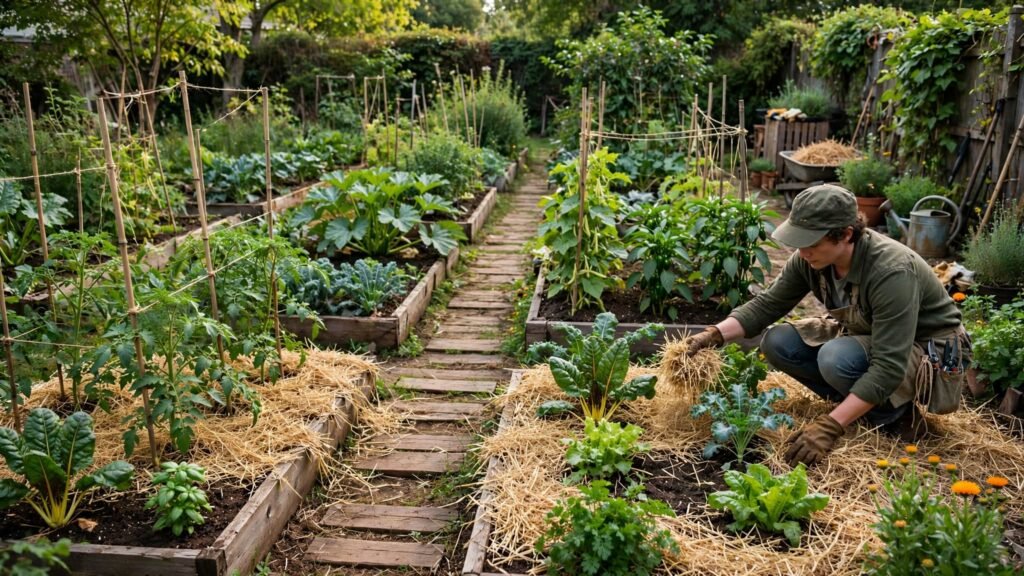
Mulching is a simple technique that can make garden maintenance easier. Organic mulch such as shredded leaves, straw, or suitable compost-based materials can help conserve moisture, reduce weed growth, moderate soil temperature, and gradually contribute organic matter as it breaks down. Apply mulch in an even layer around plants, but avoid piling it directly against stems or trunks. Too much mulch can create moisture-related problems and may provide shelter for unwanted pests. Refresh the mulch when necessary as it decomposes or becomes thin. For beginners, mulching is particularly useful because it reduces the amount of daily maintenance required and helps create a more stable environment around plant roots.
11. Learn Basic Garden Maintenance
A successful garden does not require constant attention, but it does need regular observation. Set aside a little time each week to check soil moisture, inspect plants, remove weeds, harvest ripe produce, and look for pests or disease symptoms. Remove dead or damaged plant material when appropriate and keep pathways reasonably clear. Harvesting vegetables and herbs at the right stage can encourage continued production for many crops. Keep your gardening tools clean and store them properly after use. A simple garden journal can also help you record planting dates, varieties, successes, failures, weather patterns, and useful observations. Over time, these notes can become a valuable personal gardening guide.
12. Keep Learning and Start Small
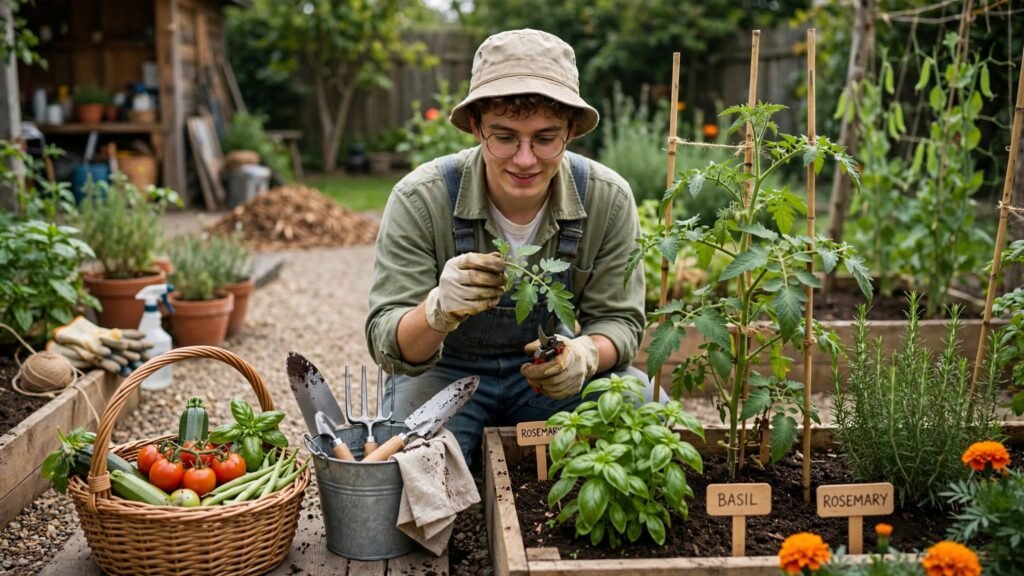
One of the best gardening tips for beginners is to accept that mistakes are part of the process. Not every seed will germinate, every plant will survive, or every harvest will be perfect. Instead of becoming discouraged, use each problem as an opportunity to learn. Start with a manageable garden rather than trying to transform your entire yard immediately. As you gain experience, you can experiment with new vegetables, flowers, herbs, containers, raised beds, composting, vertical gardening, or landscaping projects. Gardening becomes easier when you understand how your particular soil, climate, sunlight, and plants interact. Keep observing, asking questions, and adjusting your approach. With patience and consistent care, even a small beginner garden can become a productive and beautiful part of your home.
Beginner Gardening Tools You Actually Need
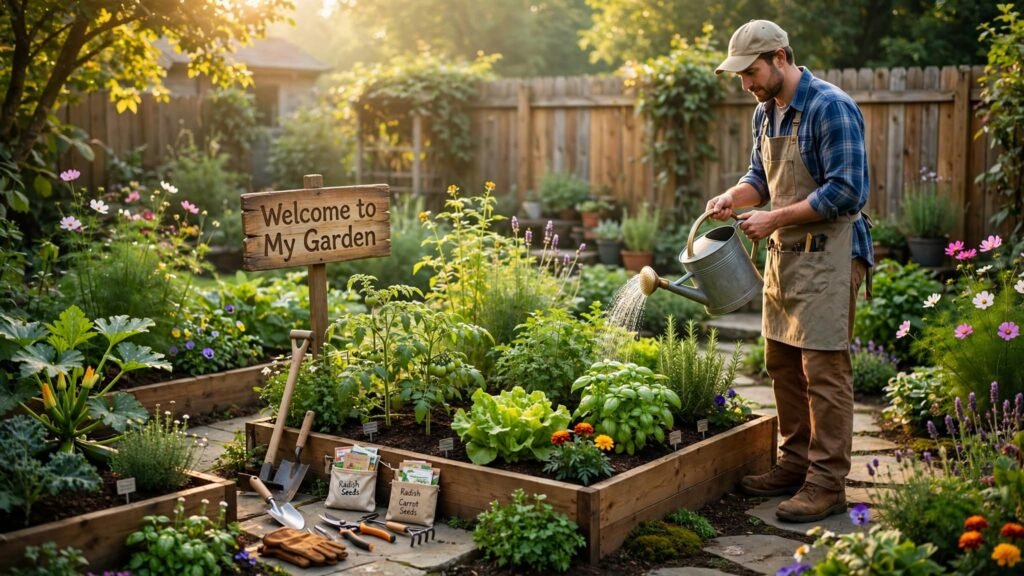
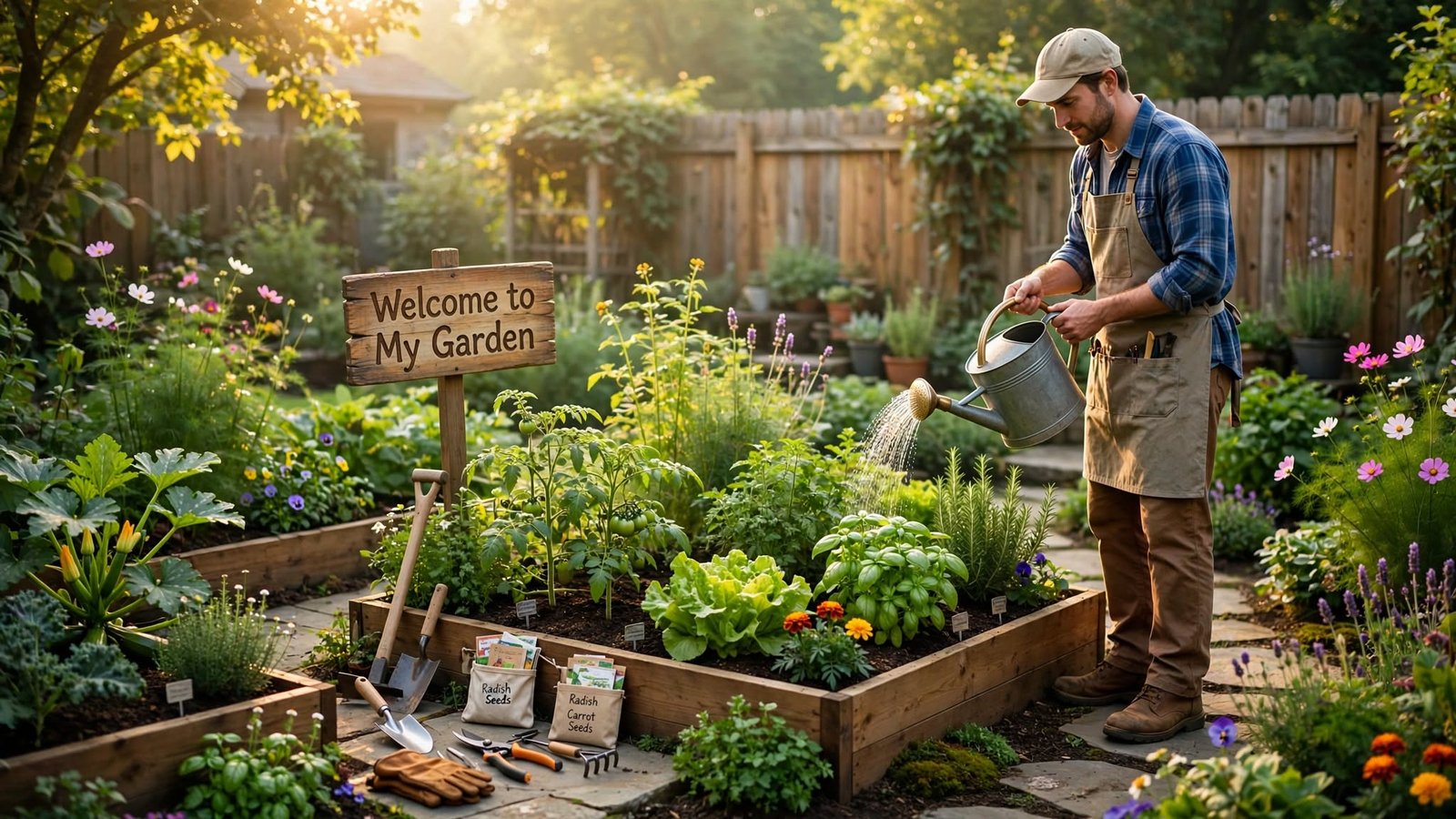
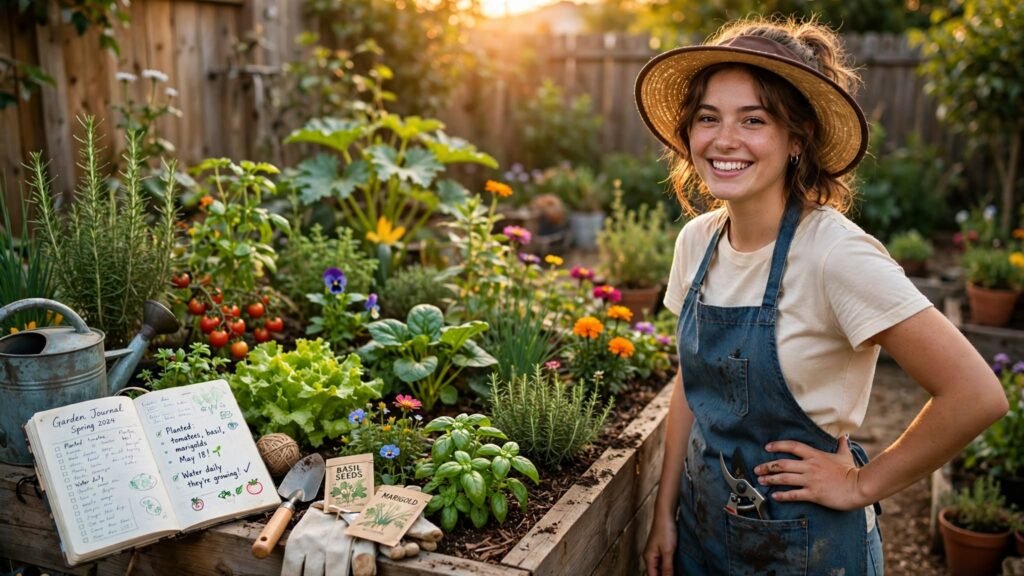
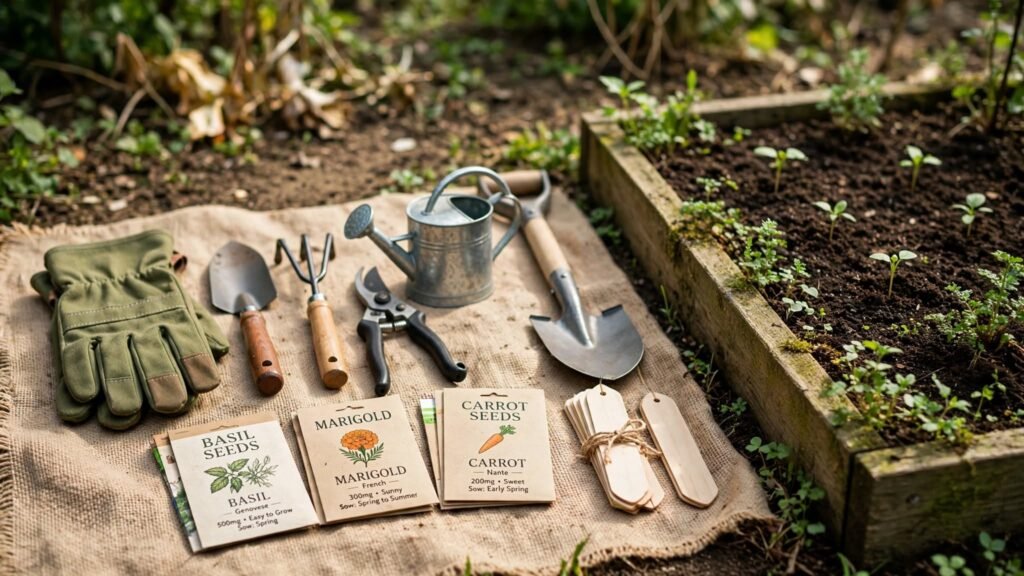
You do not need a garage full of equipment to start gardening. A beginner can usually begin with a hand trowel, garden gloves, watering can or hose, pruning shears, hand cultivator, small shovel, and a few plant labels. A bucket or basket can also be useful for carrying weeds and harvested vegetables. If you are growing in containers, choose pots with drainage holes and use an appropriate growing medium. As your garden expands, you can gradually purchase additional tools based on your needs. Buying tools slowly is often better than purchasing a large collection before you know which gardening tasks you actually enjoy. Before purchasing your supplies, check out our guide to essential gardening tools for beginners to learn which tools make everyday gardening tasks easier.
Common Beginner Gardening Mistakes to Avoid
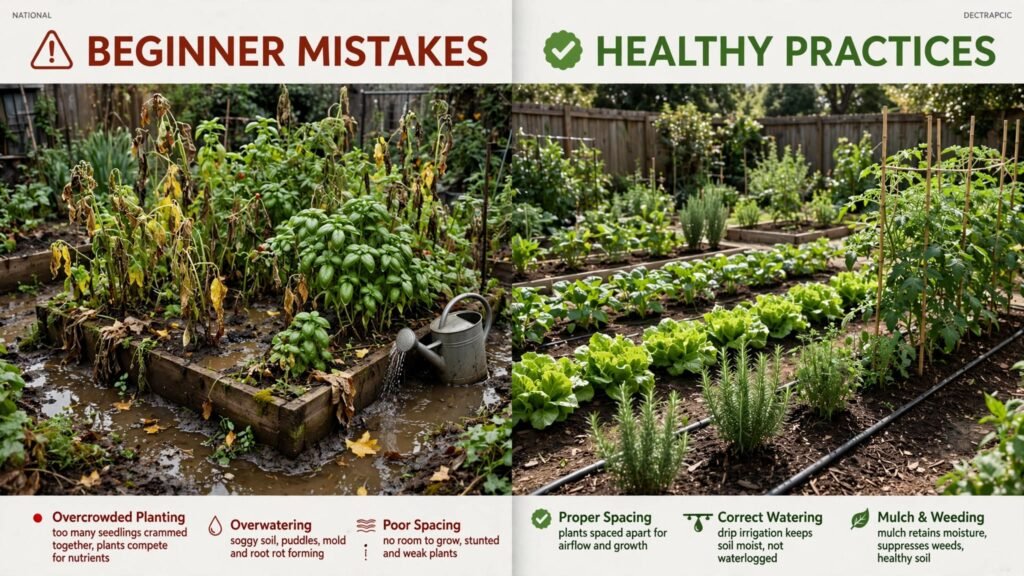
Many gardening problems can be prevented by avoiding a few common mistakes. Planting too many plants in a small area can cause overcrowding and poor airflow. Watering too frequently can create root problems, while watering too little can cause wilting and poor growth. Choosing plants that are unsuitable for your sunlight or climate can also lead to disappointing results. Beginners may also plant without checking mature plant size, ignore soil quality, or use too much fertilizer. Another common mistake is expecting immediate results. Plants need time to establish roots and develop. Gardening is a gradual process, and patience is just as important as good soil and proper watering. Start with realistic goals and learn from each season.
Conclusion
Gardening for beginners becomes much easier when you focus on a few essential principles instead of trying to learn everything at once. Choose a suitable location, understand your soil, select plants that match your climate and available sunlight, and give them the correct amount of water and space. Regular observation is equally important because it helps you notice weeds, pests, diseases, and moisture problems before they become serious. You do not need a large yard or expensive equipment to begin. A small container garden, herb planter, flower bed, or vegetable patch can provide valuable experience and plenty of satisfaction. Start with a few plants you genuinely enjoy growing, learn their needs, and gradually expand your garden as your confidence improves. Every season will teach you something new about plants, soil, weather, and your own gardening habits.
The most rewarding part of gardening is that there is always something new to discover. A failed seed can teach you about planting depth, a wilted plant can teach you about watering, and a successful harvest can show you how rewarding consistent care can be. Don’t worry about creating a perfect garden right away; focus on a garden you can understand, maintain, and enjoy. Keep simple notes about what you plant, when you plant it, and how each plant performs. Over time, these observations will help you make better decisions and develop your own gardening style. Whether your goal is fresh vegetables, beautiful flowers, fragrant herbs, wildlife-friendly planting, or a peaceful outdoor space, the journey begins with one small planting project. Start today, stay curious, and let your garden grow with you.
Frequently Asked Questions (FAQ’s)
Start with a small area or a few containers. Choose easy-to-grow plants, provide suitable sunlight, prepare healthy soil, and learn basic watering and maintenance.
Some beginner-friendly choices include lettuce, radishes, beans, basil, mint, marigolds, zinnias, sunflowers, and several locally adapted vegetables and herbs.
There is no single watering schedule for every garden. Check the soil moisture and consider the plant type, weather, temperature, soil, and container size before watering.
Basic tools include gardening gloves, a hand trowel, watering can or hose, pruning shears, hand cultivator, small shovel, and plant labels.
Adding suitable organic matter such as compost can improve soil structure and moisture management. A soil test can also help determine pH and nutrient needs.
One common mistake is trying to do too much at once. Starting small, choosing suitable plants, and learning gradually can make gardening much easier and more enjoyable.