Essential Gardening Tools for Beginners
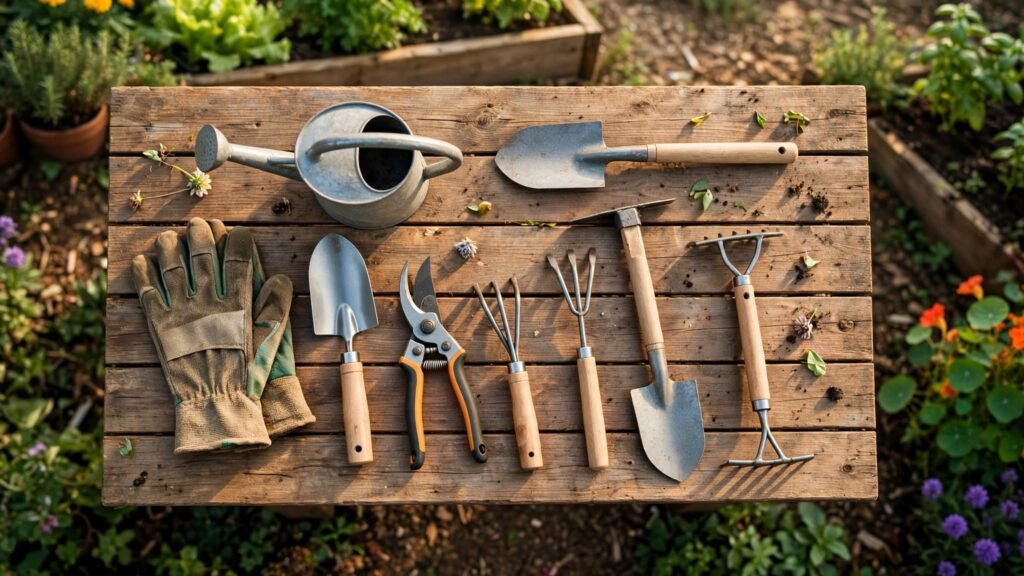
Starting a garden can be exciting, but having the right tools makes the experience much easier and more enjoyable. You do not need a shed full of expensive equipment to grow healthy plants. In fact, beginners can start with a small collection of practical gardening tools that help with planting, watering, pruning, weeding, soil preparation, and general garden maintenance. Choosing the right tools also saves time and prevents unnecessary strain while you work. Whether you are creating a vegetable garden, flower bed, container garden, or small backyard garden, understanding which tools you actually need is an important first step. This guide covers the essential gardening tools for beginners, explains what each tool is used for, and provides simple tips for choosing and caring for your equipment.
If you’re just getting started, our Complete Gardening Guide for Beginners will help you understand the basics of gardening, from choosing the right plants and preparing your soil to caring for your garden with confidence.
1. Gardening Gloves
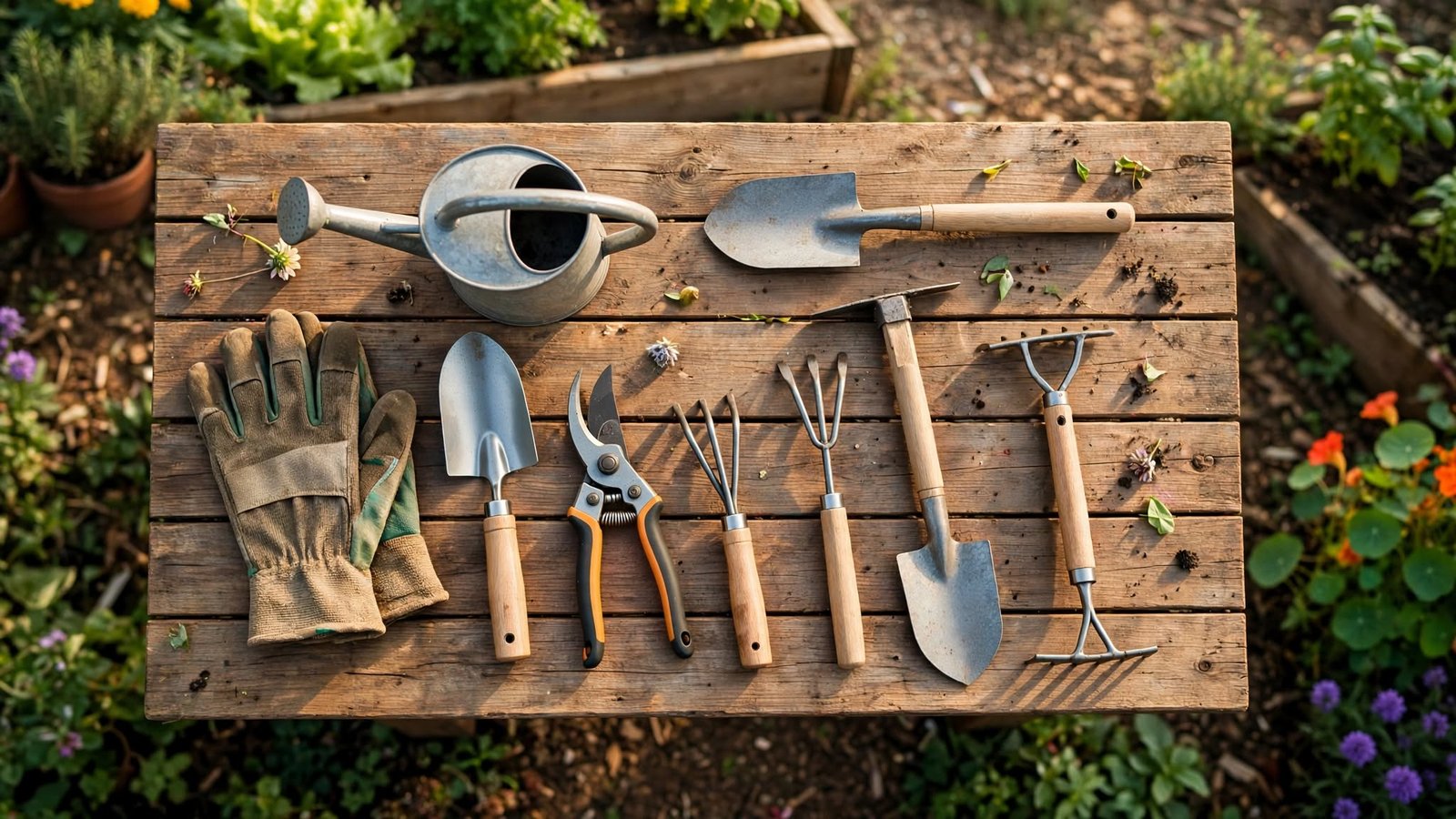
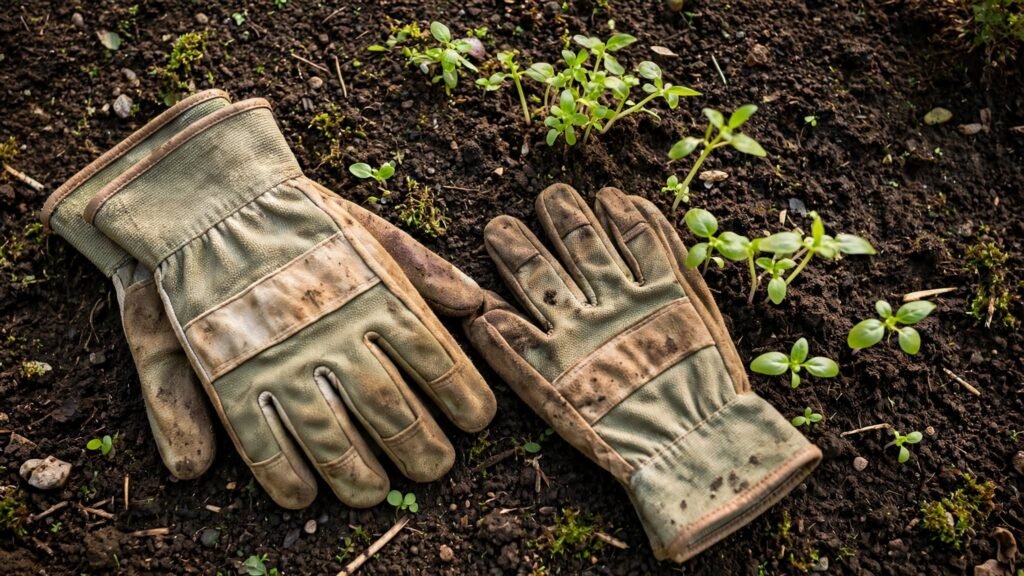
A good pair of gardening gloves is one of the first things every beginner should purchase. Gloves protect your hands from dirt, sharp plant stems, rough materials, insects, and small scratches while you work. They are particularly useful when planting, pulling weeds, handling compost, or working with soil. Choose gloves that fit comfortably without being too loose because oversized gloves can make it difficult to handle small seeds and tools. Breathable and flexible materials are generally comfortable for everyday gardening, while stronger gloves can provide additional protection for pruning or handling thorny plants. Keeping your gloves clean and dry after use can also help them last longer. Although gloves may seem like a simple accessory, they make gardening more comfortable and encourage you to spend more time caring for your plants.
2. Hand Trowel
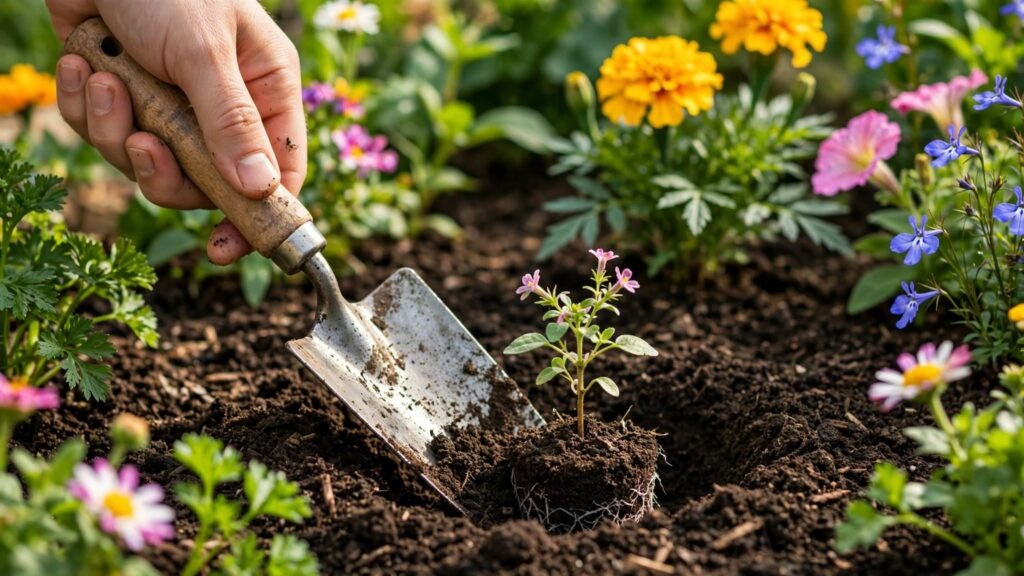
A hand trowel is one of the most useful tools for beginner gardeners. This small handheld tool is ideal for digging planting holes, moving soil, transplanting seedlings, and working around flowers and vegetables. Its compact size makes it especially useful in containers, raised beds, and smaller garden spaces. When choosing a trowel, look for a comfortable handle and a strong metal blade that will not bend easily when working in firm soil. Some trowels also have measurement markings on the blade, which can help you plant bulbs and seedlings at the correct depth. Because you will probably use this tool frequently, comfort and durability are more important than buying the cheapest option available.
3. Garden Spade
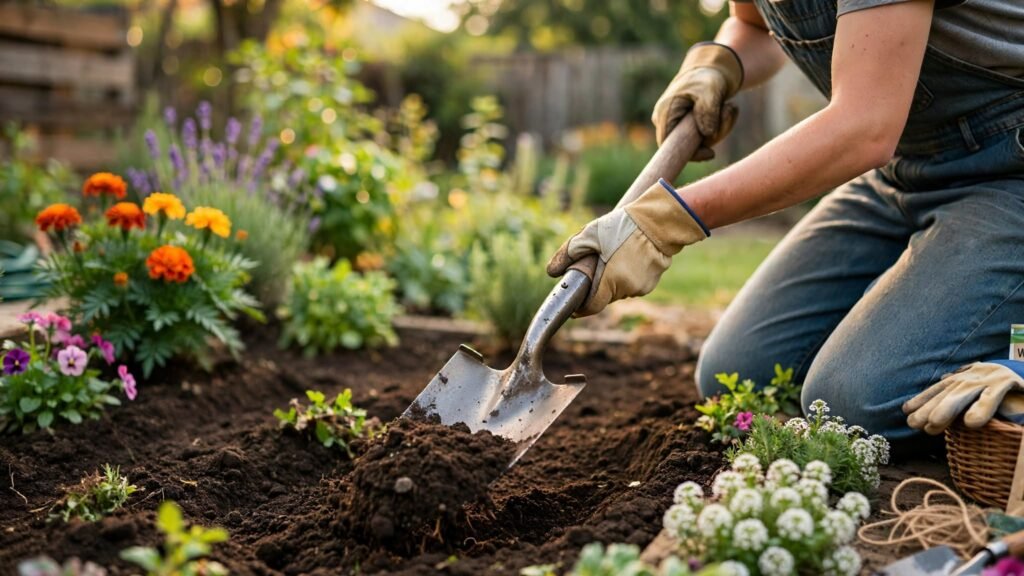
A garden spade is designed for digging and moving soil. Unlike a small hand trowel, a spade has a longer handle and a larger blade, making it useful for preparing garden beds, digging larger planting holes, dividing plants, and moving soil or compost. A sturdy spade can make difficult digging jobs much easier, especially when working in compacted ground. Beginners should look for a strong blade and a comfortable handle that allows them to work without excessive bending. A good-quality spade can last for many years when cleaned and stored properly. If you plan to create an outdoor garden directly in the ground, a spade is one of the most valuable tools to have.
4. Garden Fork
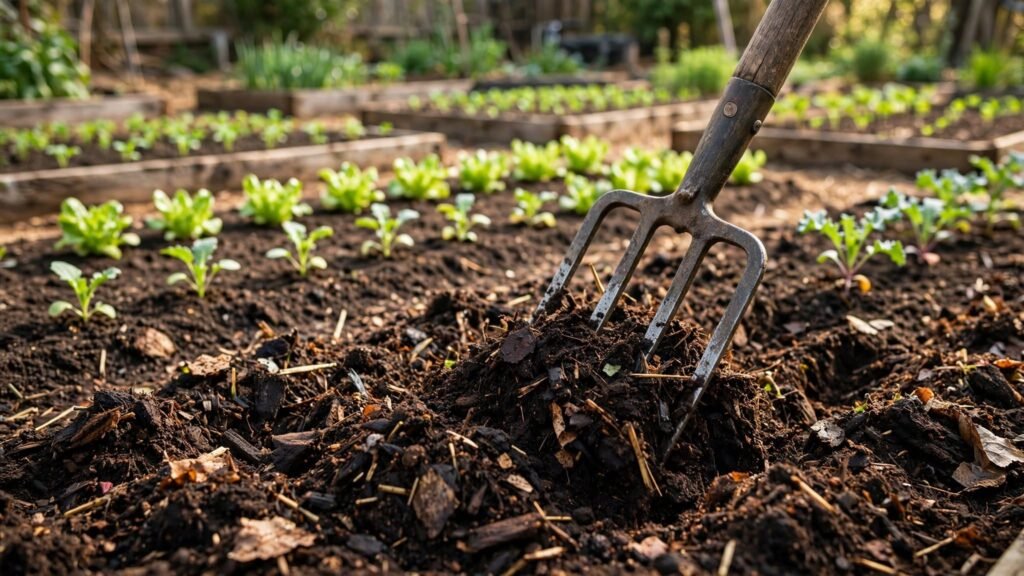
A garden fork is extremely useful for loosening compacted soil, turning compost, breaking apart clumps, and lifting roots or plants from the ground. Its strong metal tines can penetrate soil more effectively than some flat-bladed tools, making it particularly useful when preparing a new garden bed. A garden fork can also help mix organic matter into the soil and improve the structure of planting areas. When choosing one, look for sturdy tines that are securely attached to the handle. Beginners may not use a garden fork every day, but when a soil-preparation job comes along, it can save considerable effort.
5. Pruning Shears
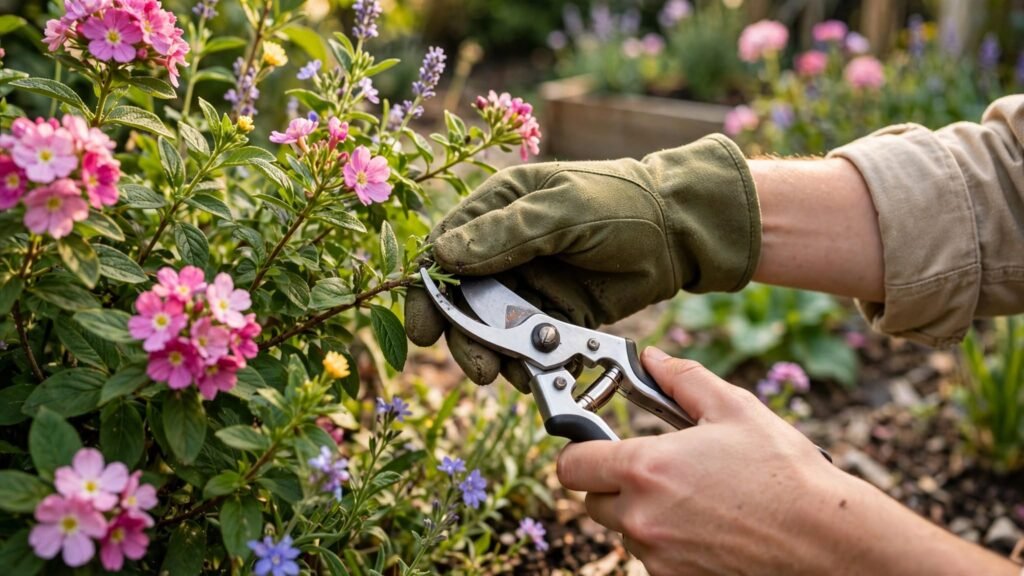
Pruning shears, also called secateurs, are essential for trimming small branches, removing damaged growth, shaping plants, and harvesting certain herbs or vegetables. Regular pruning can help many plants maintain a healthy and attractive appearance. Beginners should choose shears that feel comfortable in their hands and have sharp, durable blades. Clean the blades after working with plants to reduce the chance of spreading plant problems from one plant to another. Avoid using pruning shears for branches that are too thick because this can damage both the tool and the plant. With a little practice, pruning shears quickly become one of the most frequently used tools in a garden.
6. Watering Can or Garden Hose
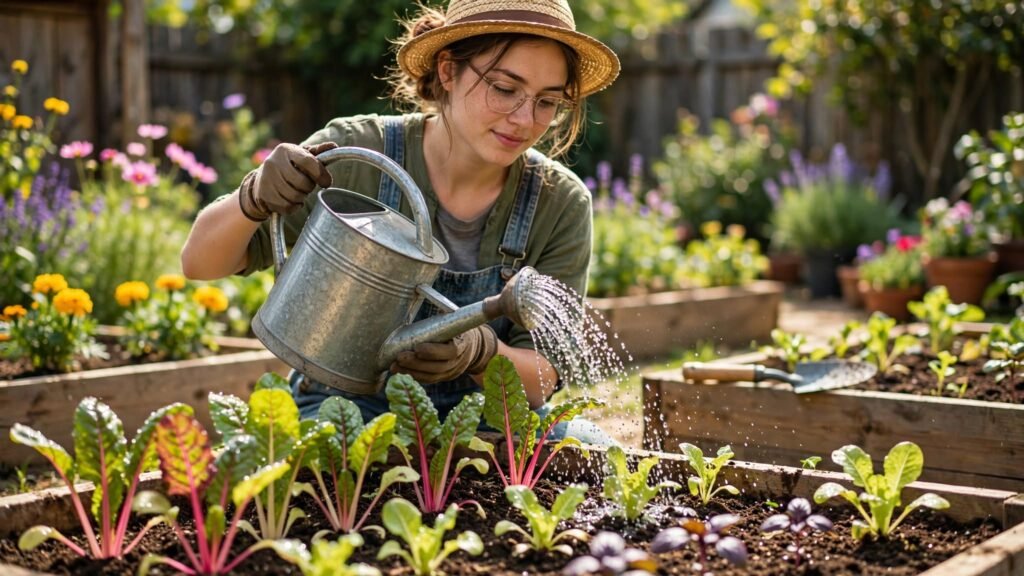
Water is essential for plant growth, so every gardener needs a reliable way to water plants. A watering can is excellent for small gardens, containers, seedlings, and indoor plants because it allows you to control the amount of water being applied. A garden hose is more convenient for larger gardens and multiple planting beds. Beginners should avoid watering plants automatically according to a strict schedule without considering weather and soil conditions. Instead, check the soil and observe your plants to determine when water is actually needed. Water slowly and deeply when appropriate rather than constantly providing small amounts of water to the surface. Choosing a watering tool that matches the size of your garden will make daily maintenance much easier.
7. Garden Rake
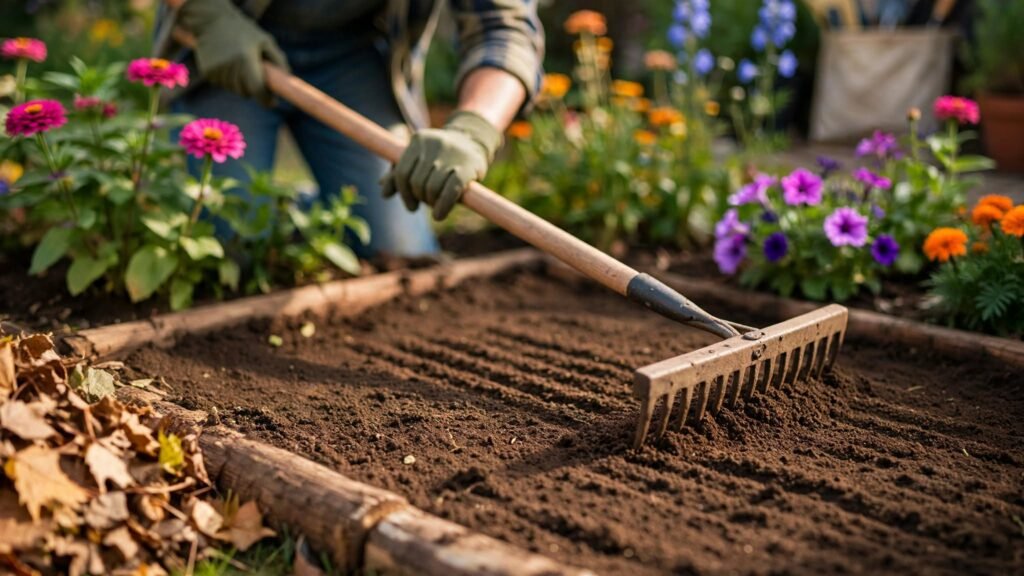
A garden rake helps clear leaves, grass clippings, small debris, and loose material from garden beds and outdoor areas. It can also help level soil and prepare a planting area. Rakes come in different designs, so choosing one depends on the type of gardening you plan to do. A leaf rake is useful for gathering lightweight leaves, while a stronger garden rake can be used for soil preparation and leveling. Keeping your garden free from excessive debris improves its appearance and makes it easier to inspect plants for problems. For beginners maintaining a backyard garden, a rake is a simple but highly practical tool.
8. Garden Hoe
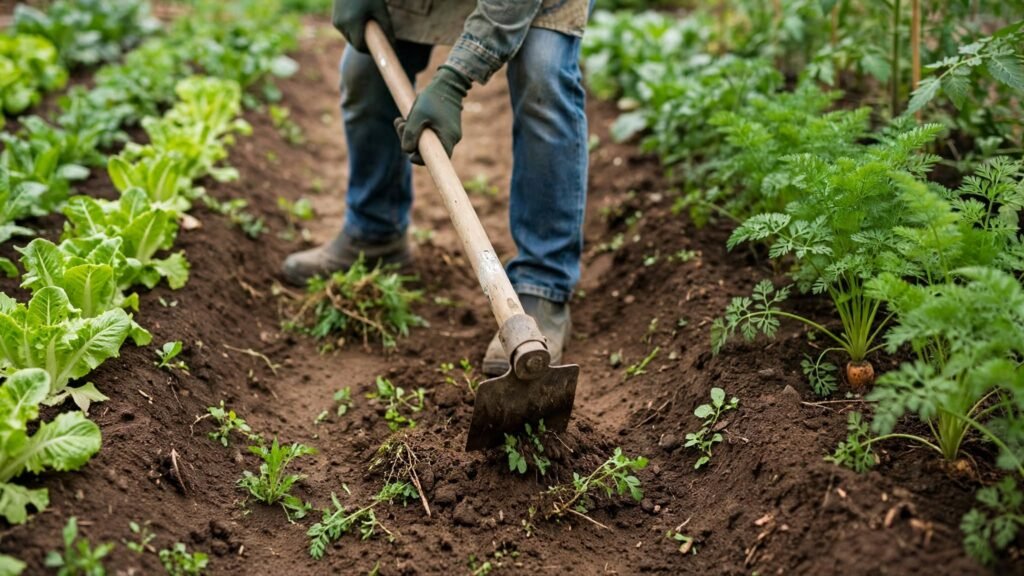
A garden hoe is especially useful for controlling weeds and cultivating the surface of garden soil. Its blade can be used to remove small weeds before they become established, while certain hoes can also create shallow planting rows for seeds. Regular light weeding is often easier than allowing weeds to become large and deeply rooted. Beginners should learn to use a hoe carefully around desirable plants so that their roots are not accidentally damaged. A comfortable handle and sharp working edge can make this task much easier. If you are growing vegetables in rows or maintaining larger flower beds, a garden hoe can become an important part of your regular maintenance routine.
9. Wheelbarrow or Garden Cart
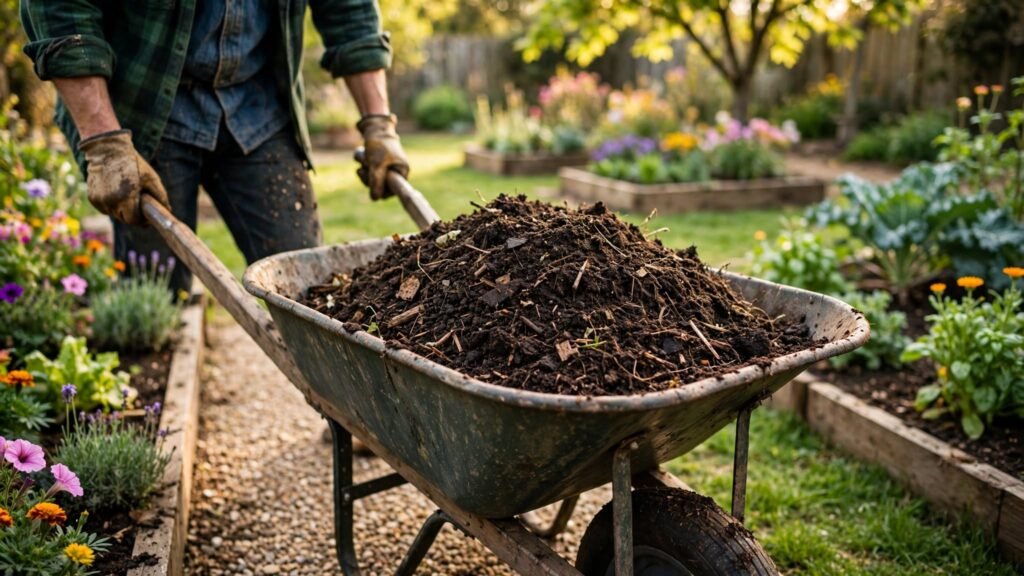
A wheelbarrow or garden cart is useful when you need to move heavy or bulky materials around your garden. Compost, soil, mulch, leaves, garden debris, and plants can become difficult to carry by hand, especially over longer distances. A wheelbarrow allows you to move larger quantities in fewer trips. For smaller gardens, a compact garden cart may be enough. Beginners do not necessarily need one immediately, but it becomes very helpful as a garden grows. Choose a model that is stable and comfortable to maneuver. Good wheels and sturdy construction are especially important if you regularly work with soil or compost.
10. Garden Kneeler
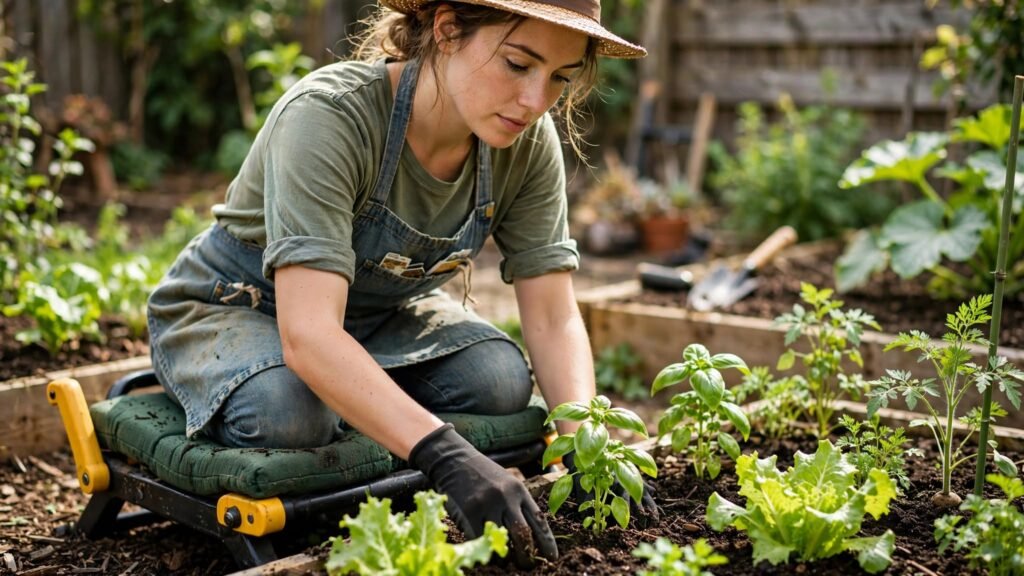
Gardening often involves bending, kneeling, planting, and working close to the ground. A garden kneeler can make these tasks more comfortable and reduce pressure on your knees. Some models can also be turned over and used as a small seat. This can be particularly useful when planting flowers, removing weeds, or maintaining vegetable beds. Beginners who spend long periods working in the garden may find a kneeler surprisingly helpful. Even a simple padded gardening mat can provide extra comfort. Gardening should be enjoyable, so choosing equipment that makes physical tasks easier is worth considering.
11. Hand Cultivator
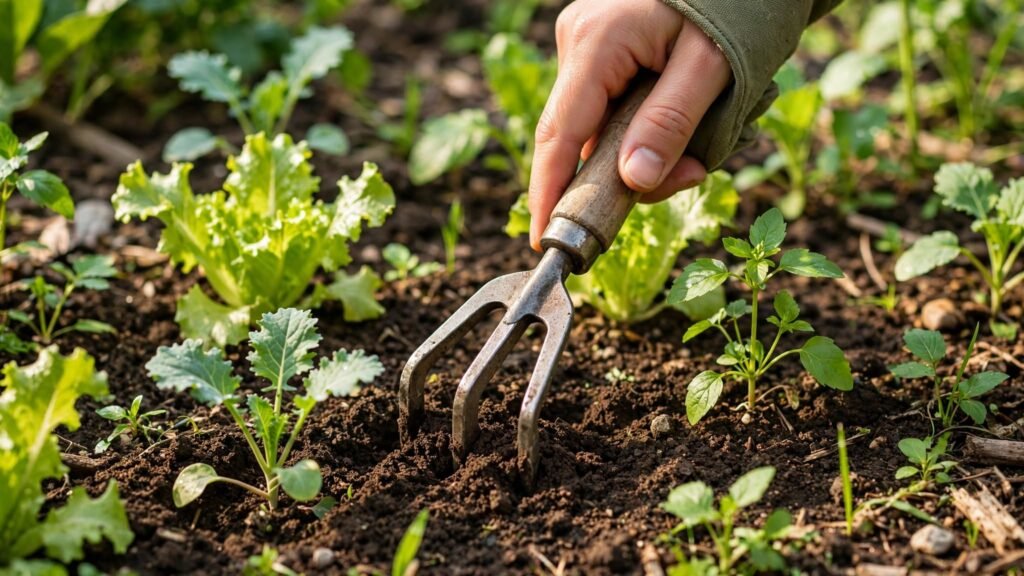
A hand cultivator has several small tines designed for loosening surface soil, removing small weeds, and mixing organic material into planting areas. It is particularly useful when working around established plants where a larger garden fork or spade would be difficult to use. A cultivator can also help break up light soil crusting and prepare the surface around plants. Because it is small and easy to control, it is a useful tool for beginners who are learning how to work carefully around plant roots. Choose a model with a comfortable grip and sturdy metal tines.
12. Garden Scissors
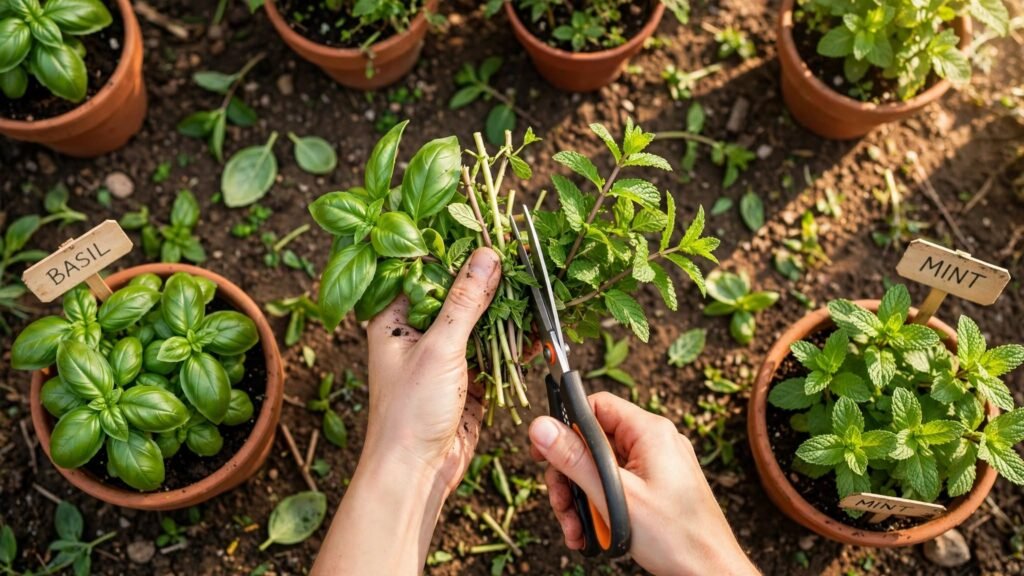
Garden scissors are useful for smaller gardening tasks that do not require heavy pruning shears. They can help harvest herbs, trim soft stems, remove dead leaves, and perform delicate plant maintenance. Keeping a small pair of dedicated garden scissors nearby can save time because you will not need to search for larger tools for simple jobs. Choose scissors with comfortable handles and sharp blades. Clean them regularly, especially when moving between different plants. For herb gardens and container gardens, garden scissors can be particularly convenient.
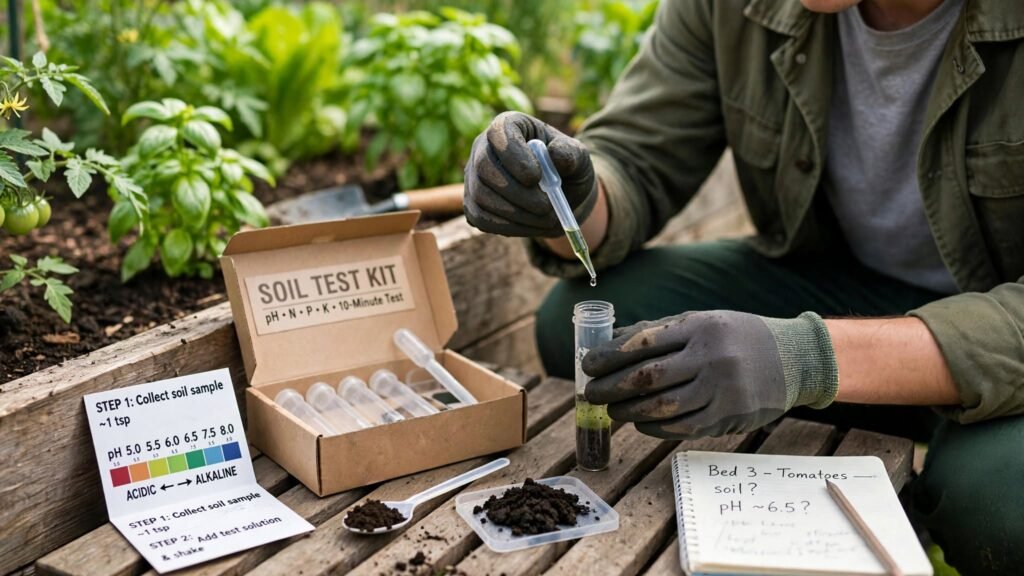
13. Soil Testing Kit
Although it is not a traditional hand tool, a soil testing kit can be extremely helpful for beginners. Soil affects how well plants grow, and understanding basic soil conditions can help you make better gardening decisions. Depending on the kit, you may be able to test factors such as soil pH and nutrient levels. Testing can be particularly useful when plants consistently struggle despite receiving adequate water and sunlight. Instead of guessing what your soil needs, testing provides useful information that can guide amendments and plant choices. You do not necessarily need to test every garden bed constantly, but having a basic kit available can be valuable when you are troubleshooting plant growth.
14. Garden Tool Storage
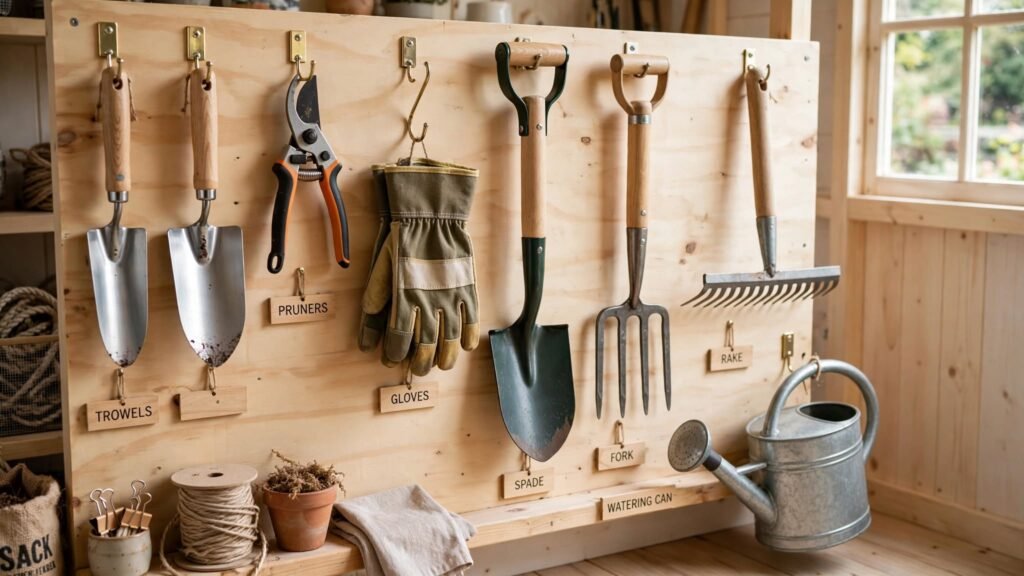
Having good tools is only part of successful gardening. Proper storage helps keep those tools clean, dry, organized, and ready for the next gardening session. Dirt should be removed from blades and metal surfaces after use, while cutting tools can be cleaned and maintained regularly. Store tools somewhere protected from excessive moisture and weather. A small tool rack, storage box, garden shed, or dedicated corner can work well depending on the size of your collection. Keeping tools organized also prevents them from being lost among garden beds. When your equipment is easy to find, simple gardening tasks become faster and less frustrating.
How to Choose Gardening Tools as a Beginner
When purchasing gardening tools, beginners often make the mistake of buying too many items at once. Start with the tools you will use most frequently, such as gloves, a hand trowel, pruning shears, watering equipment, and a spade or fork. As your garden grows, you can add specialized equipment based on the plants and tasks you actually have. Pay attention to comfort, durability, handle design, weight, and material quality rather than focusing only on appearance or price. A small collection of reliable tools is usually more useful than a large collection of poor-quality equipment. You should also consider the size of your garden. Someone growing herbs in containers will need very different equipment from someone maintaining a large vegetable garden.
How to Maintain Your Gardening Tools
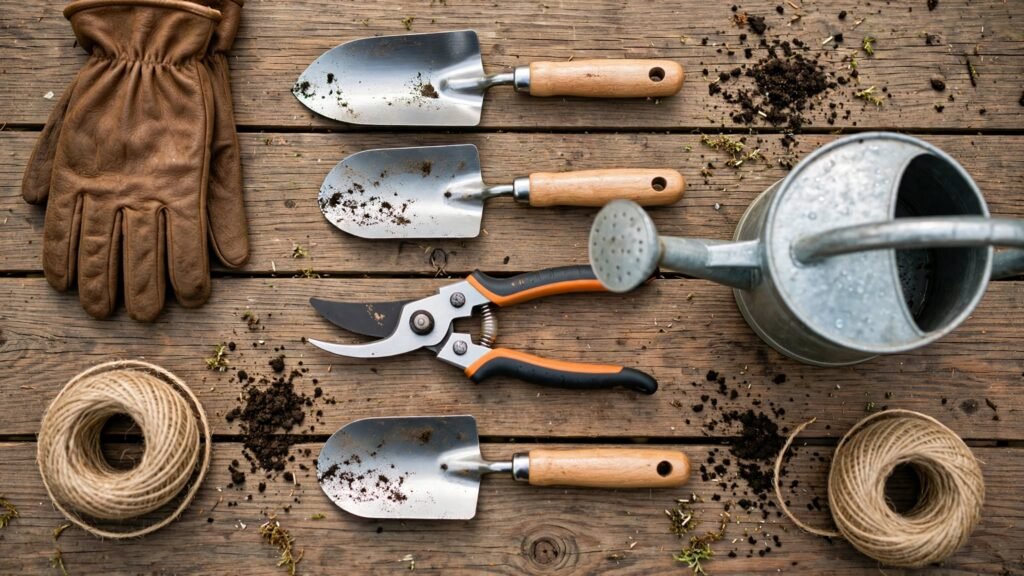
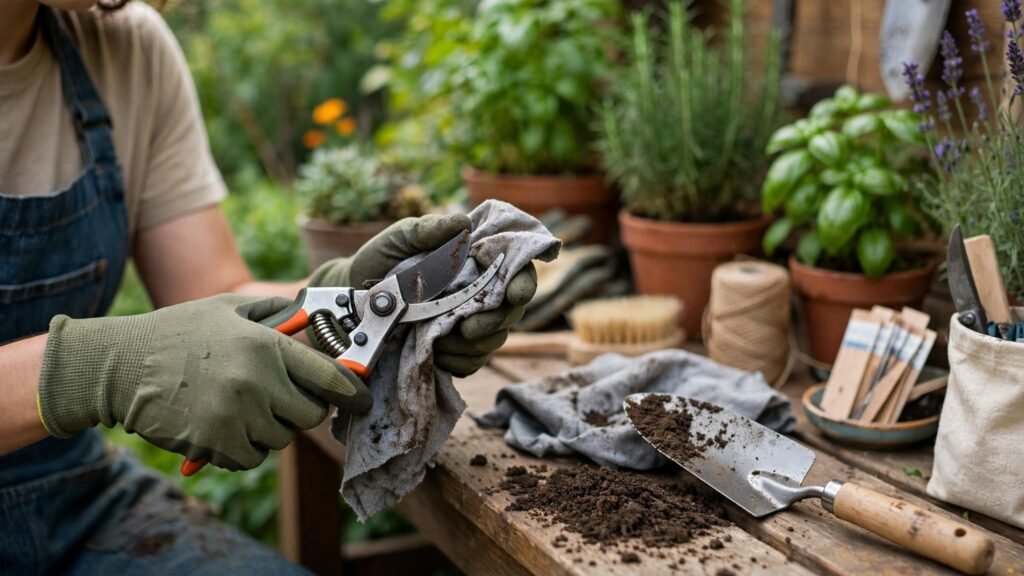
Taking care of your gardening tools helps them perform better and last longer. After gardening, remove soil and plant debris from blades, tines, and other working surfaces. Allow wet tools to dry before storing them to reduce the risk of rust. Cutting tools should be kept sharp so they make clean cuts rather than crushing plant stems. Wooden handles should also be checked occasionally for cracks or damage. If a tool becomes loose, repair it before using it again. Keeping your equipment clean also makes gardening more pleasant and organized. A few minutes of maintenance after each gardening session can prevent many problems later and protect the investment you have made in your tools.
A Simple Gardening Tool Checklist for Beginners
If you are completely new to gardening, you can begin with a simple tool collection instead of purchasing everything at once. Your basic checklist can include gardening gloves, a hand trowel, pruning shears, a watering can or hose, a garden spade, and a garden fork. A rake, hoe, hand cultivator, wheelbarrow, and garden kneeler can be added as your gardening activities expand. If you grow vegetables or plants that require particular care, you may eventually need additional specialized equipment. The goal is not to own every gardening tool available. The goal is to have the right equipment for the work your garden actually requires. Starting small allows you to learn which tools you enjoy using and which ones genuinely make your gardening routine easier.
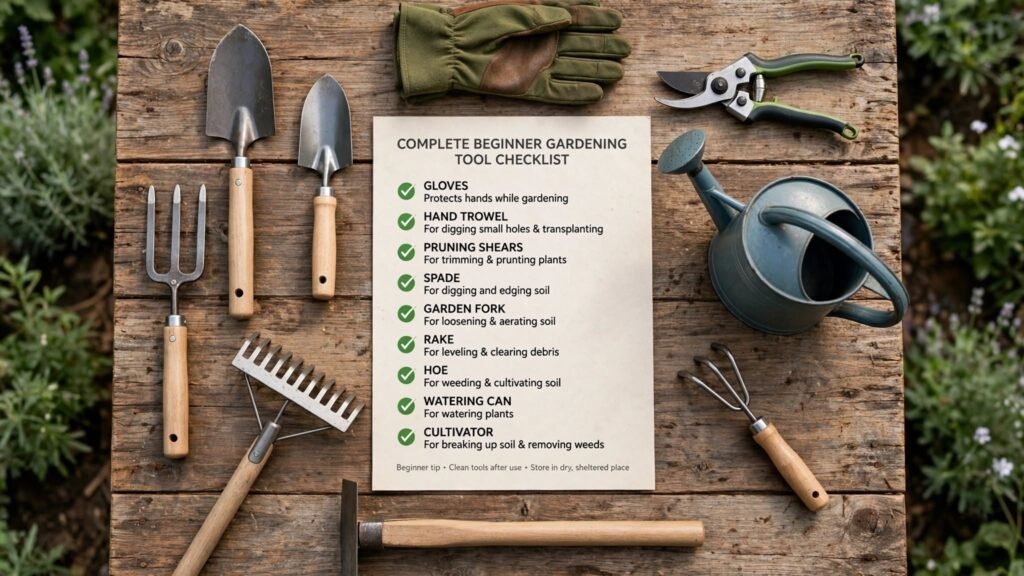
Before purchasing a large collection of tools, it is helpful to understand what your garden will actually need. If you are starting your first garden, follow our guide on how to start a garden from scratch to plan your space, prepare the soil, and choose the right equipment.
Conclusion
Starting a garden does not require a huge collection of expensive equipment. A few essential gardening tools can give beginners everything they need to plant, water, prune, weed, prepare soil, and maintain healthy plants. Basic items such as gardening gloves, a hand trowel, pruning shears, watering equipment, a spade, and a garden fork are excellent places to begin. As your gardening experience grows, you can gradually add tools that match your garden’s specific needs. Choosing comfortable, durable equipment is more important than buying every tool you see in a garden store. With the right tools in hand, everyday gardening tasks become easier, more efficient, and much more enjoyable.
The most important thing is to remember that successful gardening comes from consistent care, observation, and patience rather than having the biggest collection of equipment. Keep your tools clean, store them properly, and learn how to use each one safely and effectively. Whether you are growing vegetables, flowers, herbs, or a mixture of plants, the right tools can make your gardening journey much more rewarding. Start with a simple collection, learn what works for your space, and build your toolkit over time. With a little practice and the right equipment, even a complete beginner can confidently create and maintain a beautiful, productive garden.
Frequently Asked Questions (FAQ’s)
The most useful beginner tools include gardening gloves, a hand trowel, pruning shears, watering can or hose, garden spade, and garden fork.
No. Beginners can start with affordable, durable tools. Quality and comfort are more important than buying expensive professional equipment.
A hand trowel is one of the best tools for planting flowers because it allows you to dig small holes and work carefully around plants.
Pruning shears are commonly used for cutting small branches, stems, dead growth, and damaged plant parts.
Clean soil and plant debris from your tools, allow them to dry, and store them in a dry, protected location such as a shed, storage box, or tool rack.
A beginner can start with around six basic tools and gradually expand the collection depending on garden size, plant types, and gardening activities.